VOLNER BUILDING.
𝗦𝘁𝗿𝘂𝗰𝘁𝘂𝗿𝗮𝗹 𝗘𝗻𝘃𝗶𝗿𝗼𝗻𝗺𝗲𝗻𝘁𝘀 𝗼𝗳 𝗟𝗮𝗯𝗼𝗿 & 𝗟𝗼𝘆𝗮𝗹𝘁𝘆 𝗪𝗶𝘁𝗵𝗶𝗻 𝘁𝗵𝗲 𝗩𝗼𝗹𝗻𝗲𝗿 𝗕𝘂𝗶𝗹𝗱𝗶𝗻𝗴
As reflected within the architectural and psychosocial latticework of The House of Dissension.Within the 40th floor of the Volner Building—referred to internally as The Floor of Dissent—a precise choreography of obedience and isolation unfolds daily. This structure is not merely architectural. It is behavioral. It is ideological. Every corridor, fluorescent flicker, and silence has been optimized for productivity without protest, function without self.The following designations map the cultural and psychological distinctions between various operational divisions—each shaped by its own philosophy of work, expectations of compliance, and carefully monitored emotional palette. Employees—known internally as Innies—are not briefed on their department’s broader purpose. They perform with conviction nonetheless. Purpose is not theirs to understand—only to embody.These zones do not interact—or at least they aren't meant to. They are separated by keycard restriction, reinforced routine, and historical precedent. Cross-departmental contamination has previously resulted in unpleasantness. No official record of this exists. You will not be asked about it.Please note: Additional sectors will be revealed as classified files are declassified.Welcome to your shift. You are exactly where you are meant to be.
Compliance ensures continuity.
Volner building,

Rising from a manicured stretch of East 46th Street in Midtown Manhattan, the Volner Building is as remarkable as it is inescapable—an edifice of black steel and mirrored glass, indistinct by design. Constructed in 1957 during the corporate expansion era that followed the Behavioral Wellness Act, the building served as a flagship headquarters for Volner-Downe Inc. after their quiet pivot from pharmaceutical development to identity behavioral engineering. Its blueprint, signed off by a team of government-sanctioned architects under contract secrecy, was meant to embody transparency through modernism—yet it functions more like a controlled environment than a workplace. The first floor hosts the expected: public-facing staff, executive reception, compliance liaisons, corporate HR, and a curated wellness café. All perfectly ordinary. Beyond that, however, each level narrows in access and narrows in purpose. The building climbs with corporate hierarchy—each floor more restricted, more regulated, more sanitized than the last—until it reaches the 40th, known only to those with clearance as The Floor of Dissent. There are no public tours, no published directories. Entry requires both approval and forgetfulness. The building does not speak, but it records everything. Its walls are lined not in art, but in performance metrics and plaques honoring productivity. A place where work doesn’t just happen—it is manufactured, measured, and refined. In a city that never sleeps, the Volner Building does not blink. It processes.
THE MANAGER'S QUARTER,
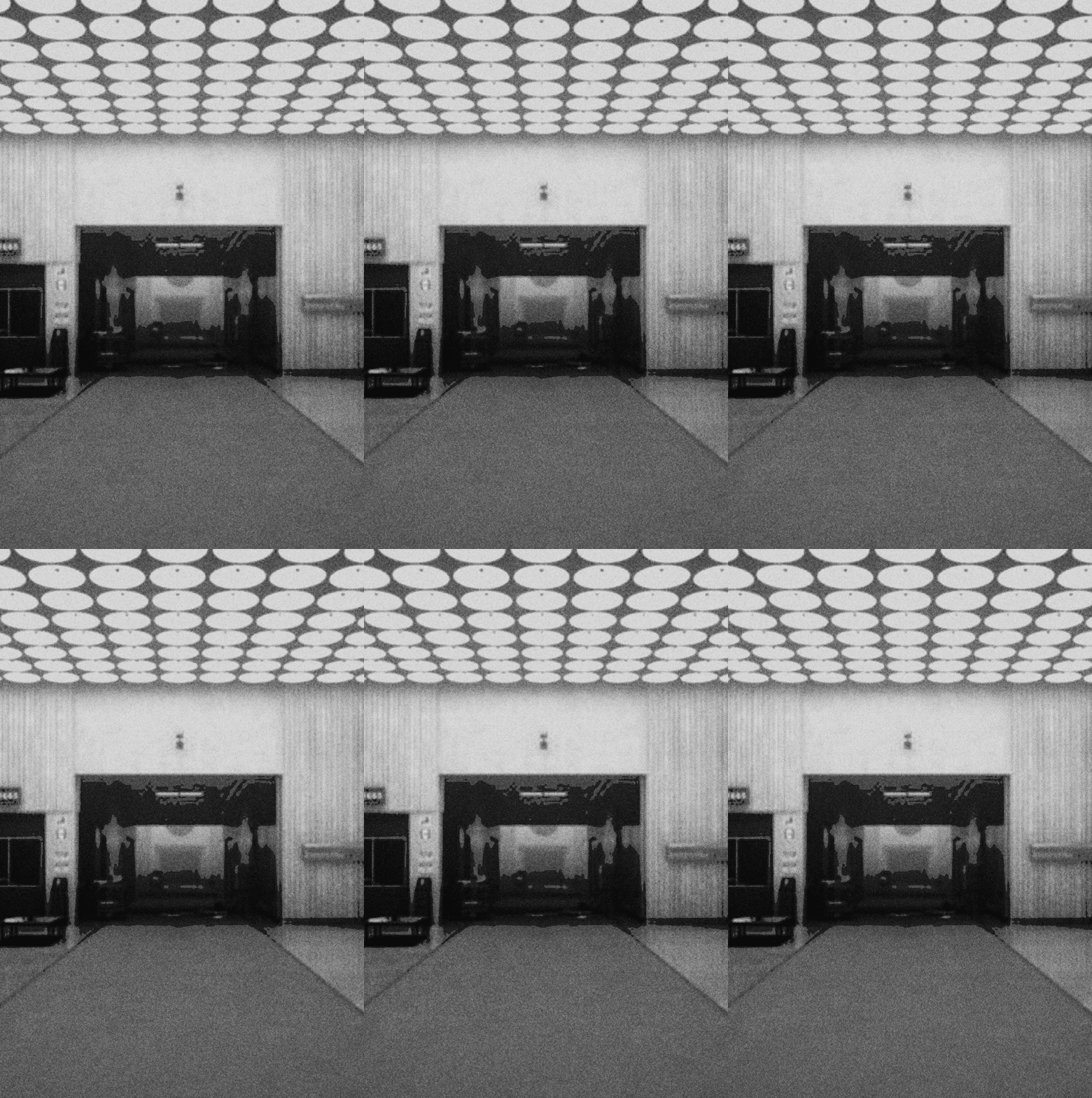
The Manager’s Quarter—known unofficially as “The Spine”—runs through the core of the Floor of Dissent like a nerve wrapped in velvet. Lined with brushed steel and trimmed with red woolen runners, the corridor’s pristine quiet masks the pressure it holds. Here, light is gentler, diffused through a ceiling of honeycombed fixtures that hum like a distant memory. Oil portraits—both of past CEOs and of landscapes too idyllic to be real—line the dark walls like silent witnesses. The air is cooler, the silence more expensive. At the far end of the hall, a single digital clock tracks not only the hour, but also the countdown to the next meeting.Eight doors flank the corridor, leading to the personal offices of the Floor Managers. Unlike the sterile uniformity of the rest of the building, each space behind these doors is permitted variation—artifacts of taste, muted eccentricity, and calculated comfort representative of each specific Manager's tastes. Each office is designed to receive only the kinds of employees each Manager is meant to handle. It is not favoritism. It is function.The Manager’s Quarter is also the only place on the 40th floor with windows—long rectangular panes that look down into the massive sights of Manhattan. When an employee is summoned, those windows frost over instantly, cutting off the gaze of all who might pass. The transparency is not for openness, it is leverage. It reminds each Innie who walks this hallway that someone, somewhere, has always been watching. It is said that no Manager ever speaks or yells loudly in their office even if reprimanding, and yet their words carry farther than any other place on the floor. Decisions are made here, redirections assigned and when an Innie leaves this hallway, they do so with new clarity—or not at all.
the boardroom,
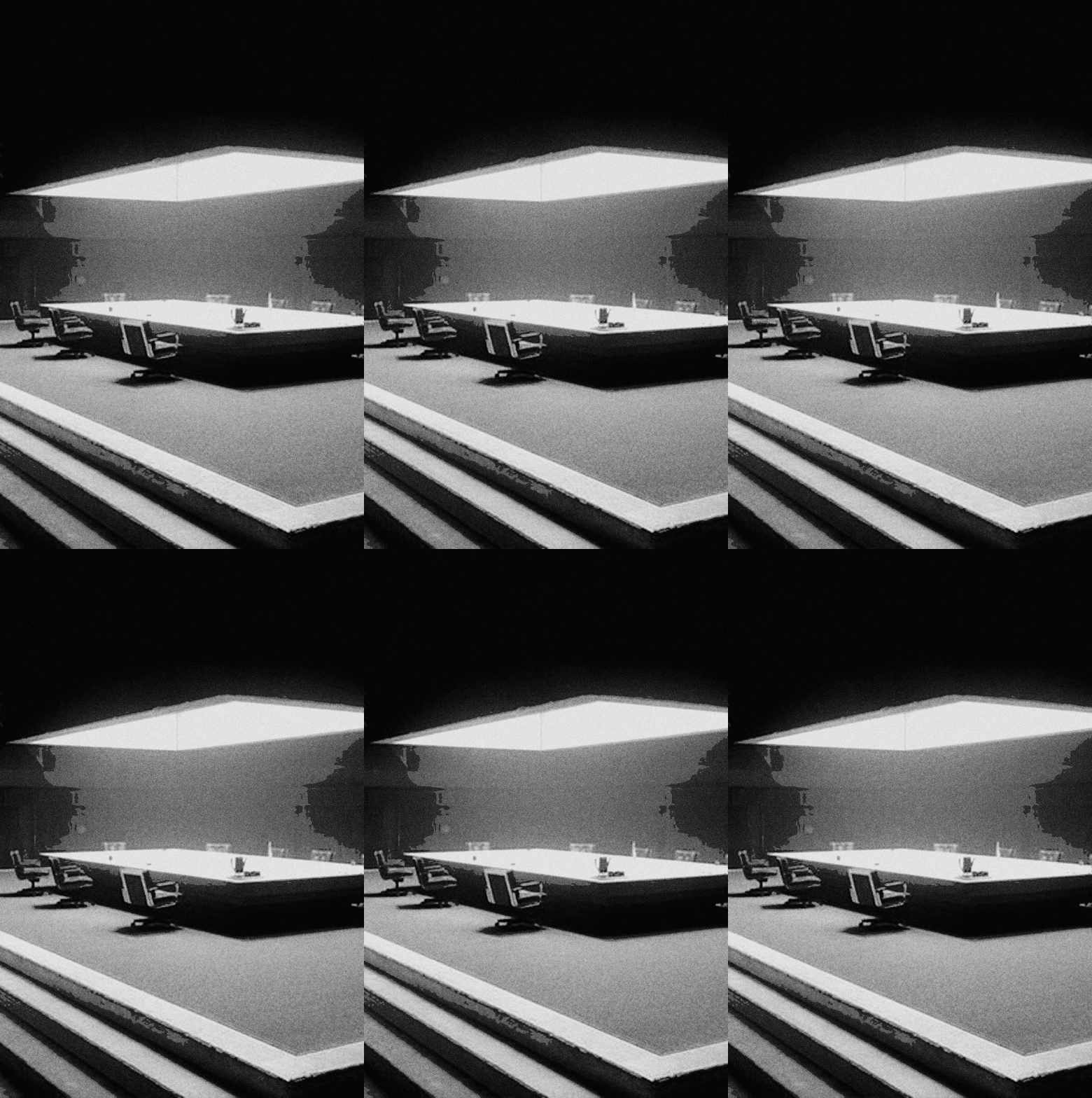
Perched on a raised dais and framed by silence, The Boardroom lies like a stage too aware of its gravity. Each step up its velvet-lined stairs feels ceremonial, as though approaching not a table—but a reckoning. The centerpiece is a sharp-cornered monolith of polished stone, ringed with sleek, minimal chairs whose absence of adornment speaks volumes. Overhead, a singular light box casts a sterile brilliance so exact it seems to erase opinion. The hush of unseen ventilation and the distant throb of the building’s heartbeat is strong. Lining the dark paneled walls, framed portraits of named predecessors watch with unreadable expressions, each one positioned just high enough to avoid eye contact.This is where the Managers virtually meet with the Executive Liaison Corps—where silence precedes consequence. It is not a space for collaboration, but for attunement. Should the Corps’ arrive on the 40th floor in person, it is seen as an omen in itself, always unannounced, always observed from the corners of the eye like a dream too lucid. When they speak, they do not ask questions. They deliver corrections. Department heads sit straighter here, every word rehearsed yet trembling beneath the surface. No note-taking is permitted. No trace is left behind. And when the door finally closes, it does so like the seal of a verdict—one that will ripple through the entire floor before anyone realizes it has begun.
THE FLOOR OF DISSENT,
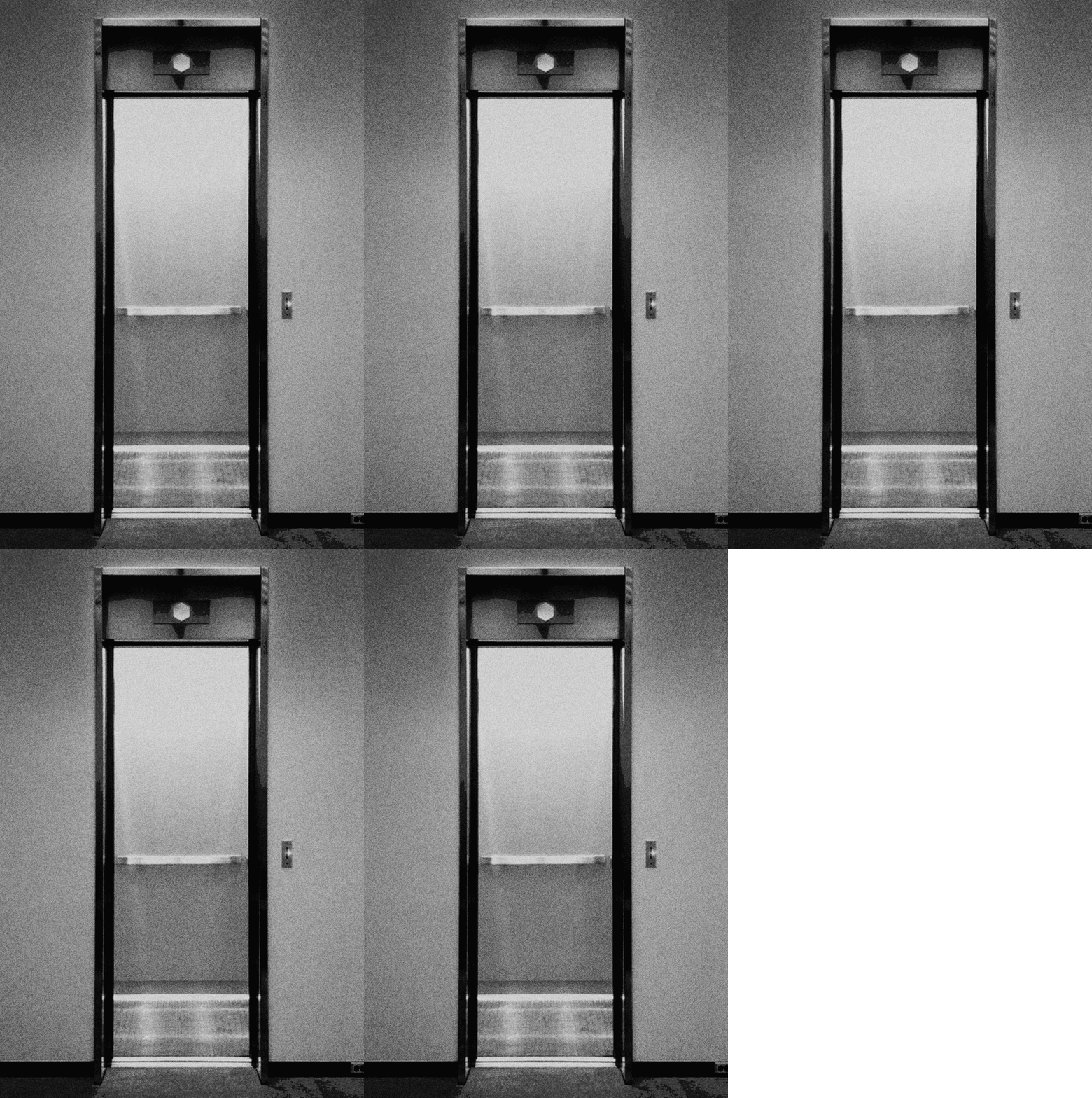
Far above the humming arteries of Manhattan, the 40th floor of the Volner Building floats in a silence too deliberate to be sterile. Known internally as the Floor of Dissent, it is less an office than a psychological labyrinth—a towering sanctum of containment wrapped in chrome restraint and walls that never show the sun. Each hallway unfurls like a trick of memory, long and angular, built to disorient: no department quite in view, no straight line from question to answer. Rooms are stitched together in a pattern only the Executives and their appointed Floor Managers comprehend. Most staff require biometric keycards just to move from unit to unit, the scanners whispering green or red like obedient oracles. There is no cutting corners here: only submission to the path you’re assigned.No two arrivals ever overlap. Dissension Employees—those whose minds have been halved for the sake of corporate clarity—arrive not through any ordinary means, but via a private elevator summoned by biometric schedule alone. These intervals, spaced precisely fifteen minutes apart, prevent any chance of overlap. It is not merely procedural, it is ritual. A silent corridor between selves. Activation must occur in solitude, unmarred by the presence of another. When the elevator doors part, the figure that steps out is no longer the full self that entered, but the surgically precise half meant for labor and obedience. No real names are spoken aloud. No recognition is offered. The Dissension is clean, and so must be its introduction.At day’s end, the ritual reverses. One by one, they vanish. Each Innie returns to the elevator in isolation, sealed like a specimen returning to its shelf. Whatever was learned, felt, or doubted stays behind, suspended in the antiseptic hush of the floor. Memory is severed neatly, archived only where permitted. Only Floor Managers and members of the Executive Liaison Corps retain full navigational clearance: slipping through each department like custodians of human machinery. For all others, the floor is a kingdom of locked doors and unknown consequences. There is no rushing here. No wandering, even time, it seems, bends to Volner-Downe’s hand.Beneath its surface veneer, entire divisions operate with surgical precision. The Behavioral Wellness Team, the Data Reconciliation Unit, the Document Memory Stabilization Office, Interpersonal Surveillance, the Volner Nutrition & Sustenance Development Team. There's the Reflection Wing that administers identity alignment through carefully curated truths, while the the Breakroom takes care of Cognitive Restoration Annex reconditions of those who fracture under the strain.To outsiders, the 40th floor may resemble a center for psychological maintenance but to those within, it is clearer with every passing hour: this is not where the mind is healed. This is where it is rewritten. Where discomfort is rendered illegible, and deviation processed into doctrine. Walk far enough into its core, and something shifts—like the feeling of forgetting your own name in a dream you were once certain was real.
behavioral wellness department,
The Behavioral Wellness Team's office occupies a muted stretch of the 40th floor, where even breath feels surveilled. Seamless, pale walls emit a sterilized warmth, cloaking the space in a calm that teeters on the edge of something colder. Fluorescent panels hum in a fixed twilight above, eliminating all shadows and with them, any illusion of privacy. The room is a study in restraint—devoid of clutter, personality, or softness. Modular consoles blink with real-time biometrics; reclined chairs are spaced at unnatural intervals, designed not for comfort but for exposure. Here, Technicians operate like emotional custodians, delivering affirmations and corrections with mechanical grace, often reciting mantras they do not remember learning.Mounted screens loop curated flashes of Outie life—mundane gestures, half-remembered sunlight, a hand brushing hair behind an ear—all fed into the subconscious to anchor the Innie to an idealized external self. Behind the scenes, biometric analyzers track posture, tone, thermal flux, and micro-expressions, quietly logging deviations. The office is a controlled atmosphere, its purpose cloaked in therapeutic language but steeped in directive control. What appears to be nurturing is simply calibration; a facility for converting subtle unrest into actionable compliance.Along a narrow passage known internally as the Hall of Clarity, a mirrored surface conceals the truth: a long, one-way viewing corridor from which Supervising Compliance Officers observe employees without detection. To those inside, it’s just another wall—innocuous, reflective, unassuming. But from the other side, every fidget, pause, or flicker of dissent is noted and stored. Nearby, a compact break room sits silent, outfitted in calming green vinyl and low stools. It offers nutrient bars, electrolyte water, and little else—just enough to suggest care without disrupting the rhythm of obedience.
data reconciliation team,
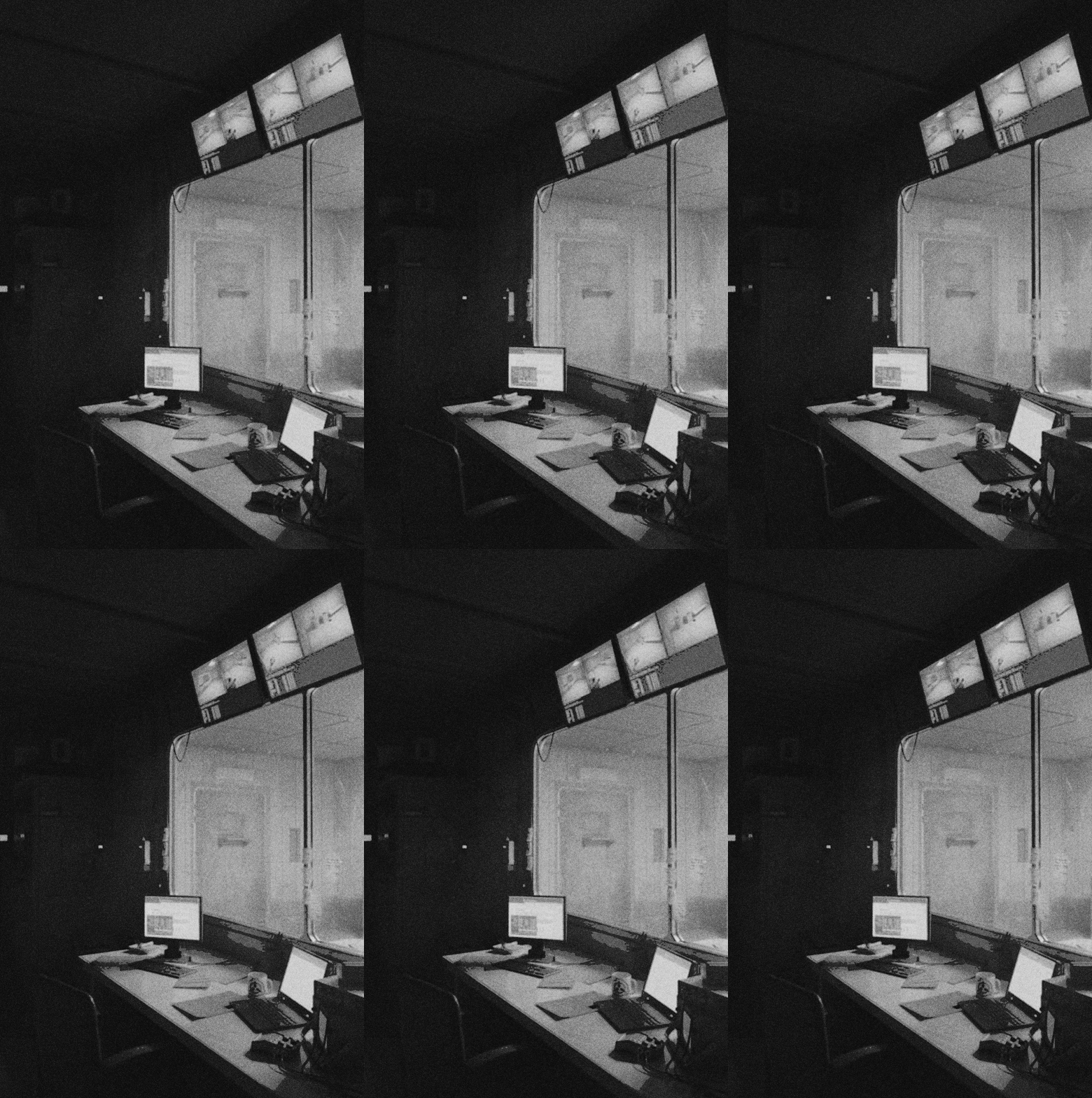
Tucked in a quiet recess of the 40th Floor, the Data Reconciliation Team’s room feels more like a forgotten nerve in a greater machine than a workplace. There are no windows, no art, no illusion of openness—just four desks, joined at their edges like the points of a compass, humming with silent data streams and backlogged memory fragments. The walls, sterile and fluorescent white, stretch without adornment, casting a glare that flattens time. At certain intervals, the ambient lighting shifts—subtle hues of pale blue, soft green, or amber gold—an automated response triggered by behavioral lag, designed to simulate focus or calm but the effect is clinical, like giving a dying flower filtered light through glass.In the far corner, a vending machine sighs beside a coffee unit and an array of synthetic teas, where workers gather during their brief respites. The conversation here is ( sometimes ) low, measured, muffled—half-hearted attempts at connection, delivered in fractured tones that betray more than they say. Two thresholds lead to identical bathrooms, unmarked and nearly silent. This room, like all others in the Floor of Dissent, is more containment than office—its geometry a reminder of what’s permitted, and what must remain unsaid. The air itself feels curated, meant to pacify, to hold one’s shoulders just slightly heavier.
memory stabilization team,
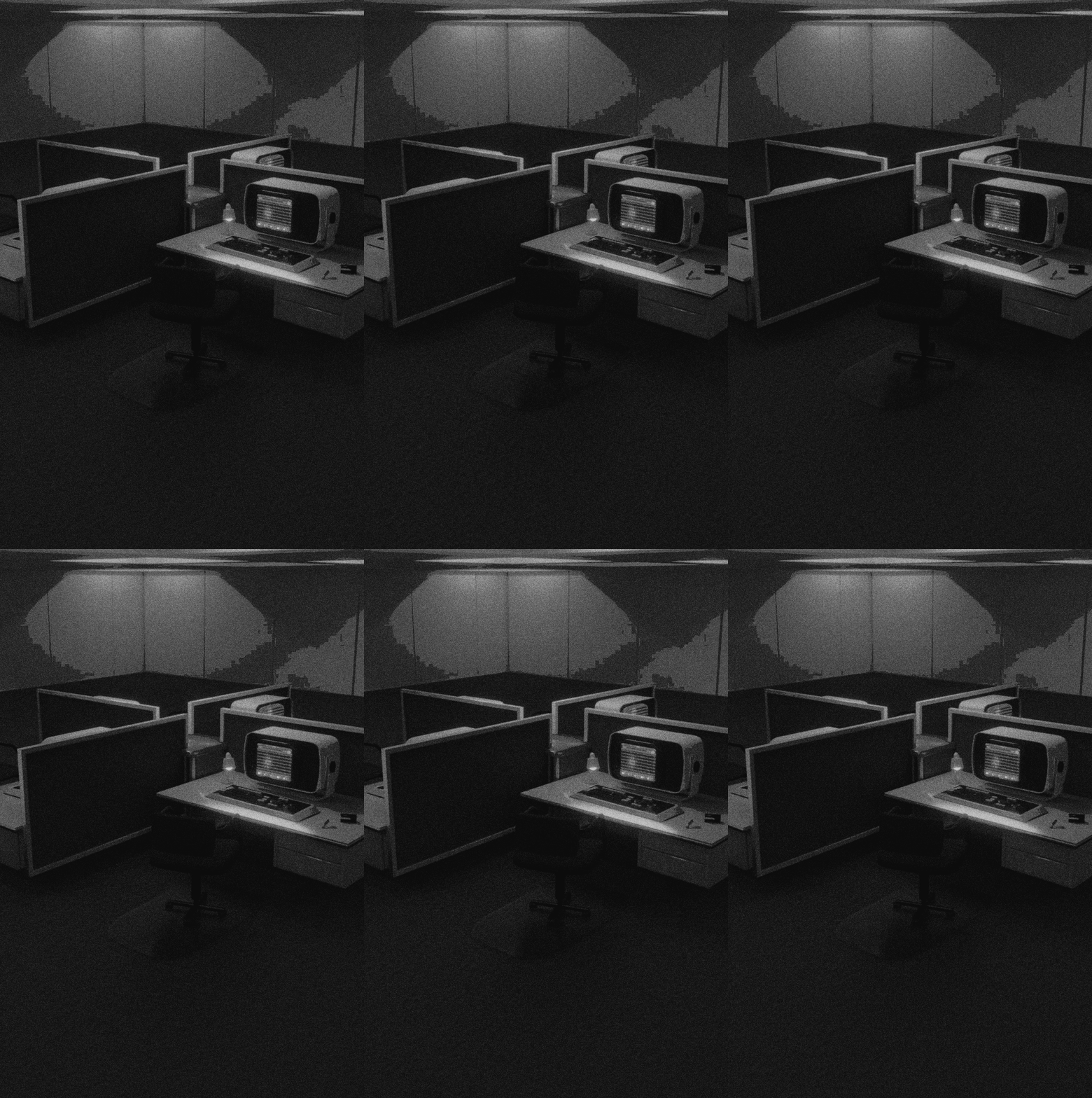
The Memory Stabilization Team operates within a chamber of uncanny precision—an observatory of ordered thought, engineered silence, and sterilized light. Angled control consoles stretch across the room in a sweeping arc, each station identical to the last, as though memory itself could be cataloged into uniformity. Embedded monitors blink with fragmented neural sequences, flashing micro-glimpses of dissented recollections awaiting correction. The walls are paneled in soft, sound-dampening grids that mute every shuffle of motion, every exhale, until the room begins to feel suspended outside of time. Fluorescent lighting pools upward from beneath the consoles, casting a clinical halo that keeps the room in gentle shadow, as if to suggest that what happens above is all that matters.Chairs on silent wheels glide between terminals like ghost operators, guided by the biometric rhythm of the Innie assigned to each post. No décor, one clock, no windows—only data, quietly looping behind glass, awaiting approval, deletion, or redirection. This is where corrupted Outie recall is scrubbed clean, where fragments are spliced, dampened, re-threaded into acceptable linearity. If a team member speaks, it is in whispers coded by regulation, their words vanishing into the ceiling like steam. Everything about the space speaks to containment—of thought, of error, of self. Here, memory is not treasured. It is treated.
interpersonal surveillance integrity team,
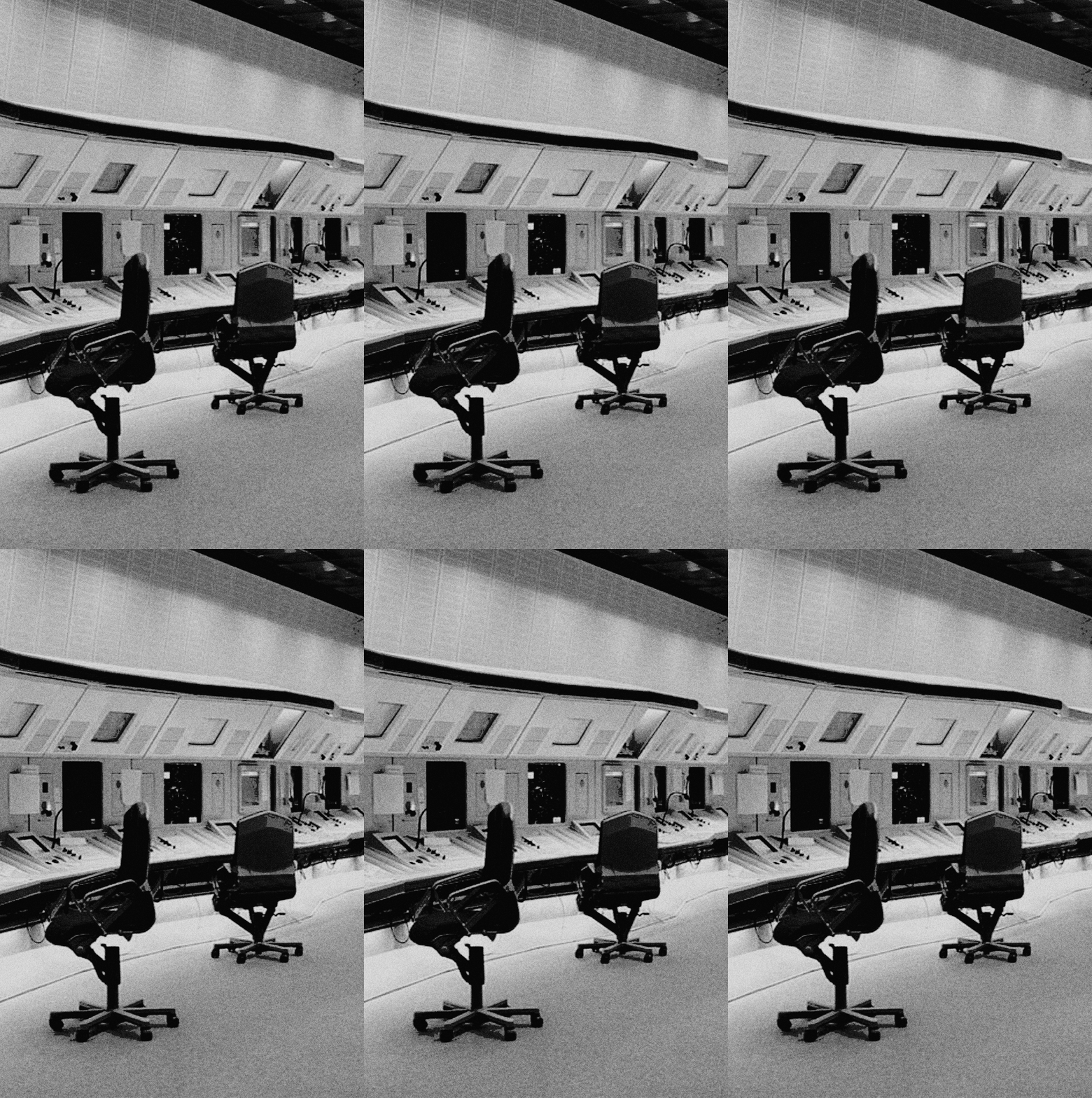
The Interpersonal Surveillance Integrity room stretches endlessly in sterile formation—row upon row of uniform desks, each equipped with an analog typewriter and a fixed-angle phone that never rings but always listens. The overhead grid of fluorescence casts a white, humming monotony across the workspace, diffusing identity into silence and task. No one sits near another. The spacing is deliberate, designed to erase the chance of whispered solidarity. The floor is carpeted in dull blue, not for comfort, but for the sound-absorbing properties that prevent footsteps from ever echoing. This is not a room meant for collaboration—it is a chamber for redaction. A place where words go to be rewired, softened, or erased altogether.Each desk receives a daily stack of internal communications—memos, transcripts, instructional guides—that must be read line by line for “emotive contamination.” A phrase too tender. A word too sharp. The Analysts sit motionless under the lights, listening, taking notes, spotting irregularities. Some say the documents hum faintly before deletion, as though resisting revision. Their work is to disappear sentiment before it takes root—to strip the narrative of any accidental humanity that might destabilize the intended clarity of company language. Only red ink stains fingertips, and the ghost of language too dangerous to be spoken aloud.
Office of Hourly Preservation Team,
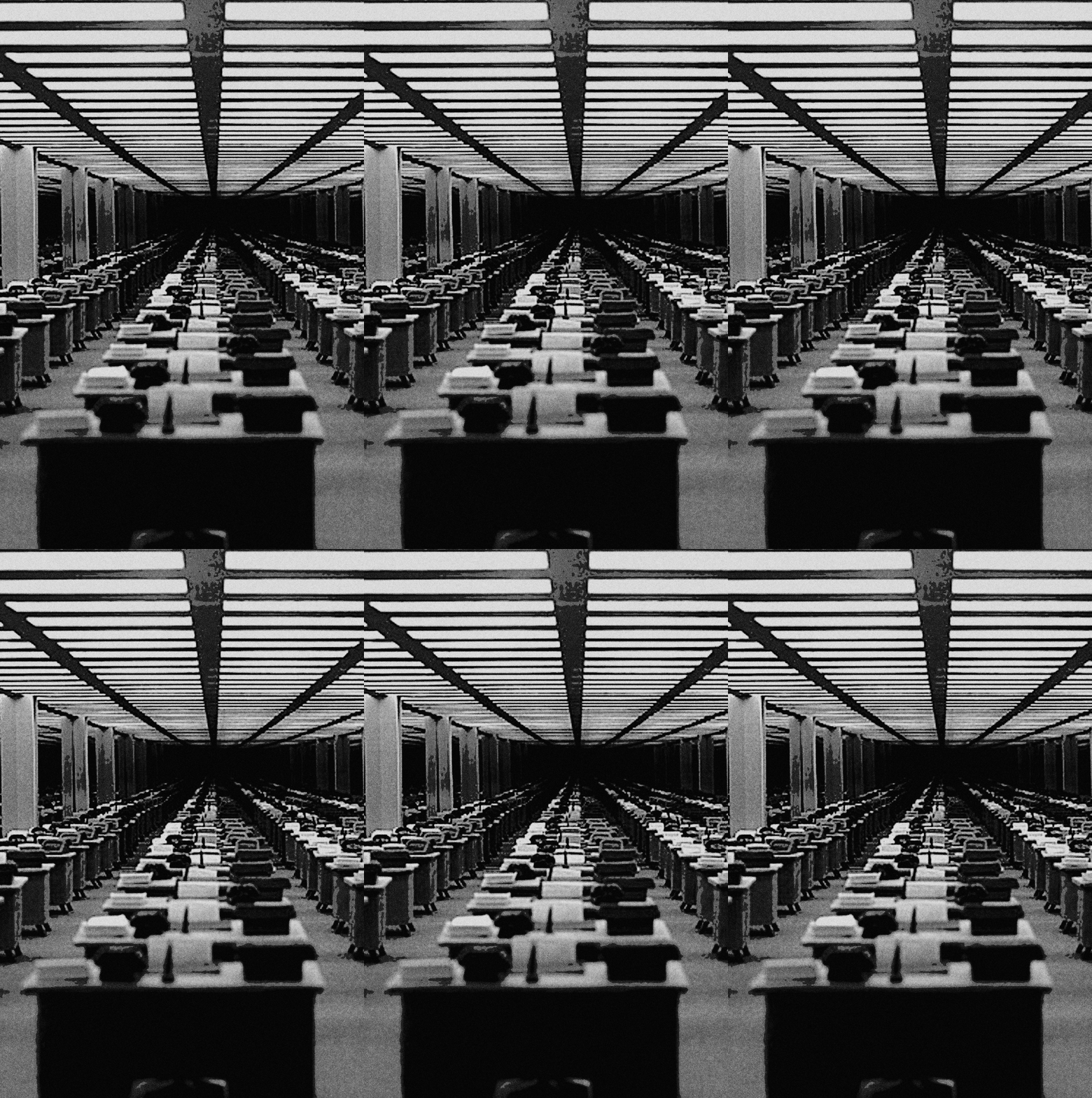
The Office of Hourly Preservation exists in a hush so dense it feels pressed into the walls. Elevated platforms risen like shrines in a darkened chamber, each desk surrounded by narrow steps and glowing with the cool hum of overhead spotlights. Suspended from the ceiling, delicate tethered microphones lower slowly like mechanical vines, tuning in—not to words, but to the shape silence takes between them. This is not a place of chatter or correspondence. It is a sanctum of surveillance, where Innie employees review the smallest interactions of their dissented peers, combing through daily transcripts and hallway footage for the imperceptible drift of deviance.Here, nothing is ever called by its name. A cough too rhythmic. A glance two seconds too long. A pair of phrases said in sequence—“I forgot” and “me too”—flagged not for content, but for undertow. Footage streams across sunken monitors, silent and looping, while preservation agents take notes in shorthand only they’ve been taught to read. Red folders signal patterns that need escalation. Blue folders are “clean”—though even that is a guess. No one knows who writes the thresholds. No one knows who watches the watchers. And yet, no one asks.What’s most unsettling is the absence of windows or even ambient sounds beyond the occasional click of a headset being lowered into place. This is by design. Innies stationed here are reminded through unspoken protocol that they are ghosts among ghosts—monitoring coworkers who must never know they’re being observed by one of their own: one's who are only titled by names like Subject A, Subject B, etc. There is a break area, tucked against the far wall, lit dimmer than the rest. It has no seating, only a narrow standing counter, a steaming urn of caffeine-neutral tea, and a notice pinned behind glass: Preserve what you witness, not who you are.
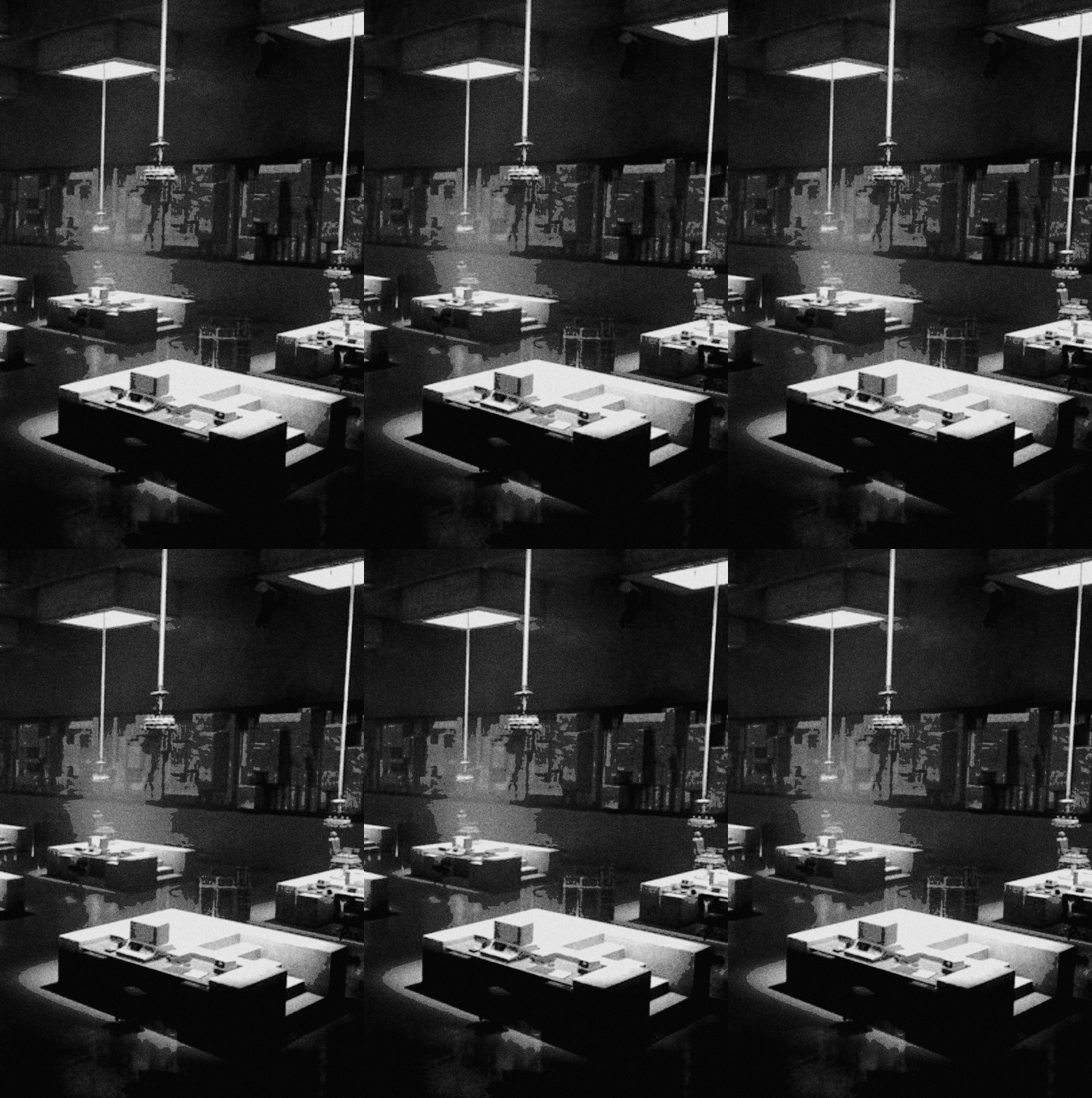
Mnemonic sanitization bureau,
The Mnemonic Sanitization Bureau is tucked behind a windowless, hermetically sealed door—its surface sterile, its signage unceremoniously direct. No plaque of pride, no flourish of welcome. Just a warning, etched in industrial font: “Do Not Proceed Without Managerial Escort.” Inside, the air feels unusually still, as if the room itself is holding its breath. Fluorescent light refracts faintly off the curved plexiglass partitions, casting a translucent shimmer over everything. This is where memory is not stored, but stripped. Agents here do not preserve—they erase. What flickers up during a task; a child’s voice, a certain shade of blue, a word not meant to return—must be identified, isolated, and wiped. The process is not violent. It is practiced. Efficient. Surgical. Reported by those who work in the Bureau, then performed by Dissension Surgeon's in another wing they will never know about.The agents sit behind mirrored partitions, working in pairs when the risk of contamination is high. Reports brought in are first scanned for color, then combed for phrases that might have triggered unintended recollection. If a smell has lingered, if the sound of rain has returned someone to the wrong hallway of their past, it is notated with a pen that bleeds only disappearing ink. Occasionally, something slips—a whisper, soft and sticky, making it past the filter. Those are the moments agents dread. They are instructed not to repeat what they hear, only to log it, to mark the timestamp and breathe through it before handing it to a Manager. In the Mnemonic Sanitization Bureau, nothing is more dangerous than a memory that doesn’t want to go.

Volner Nutrition & Sustenance Dev Team,
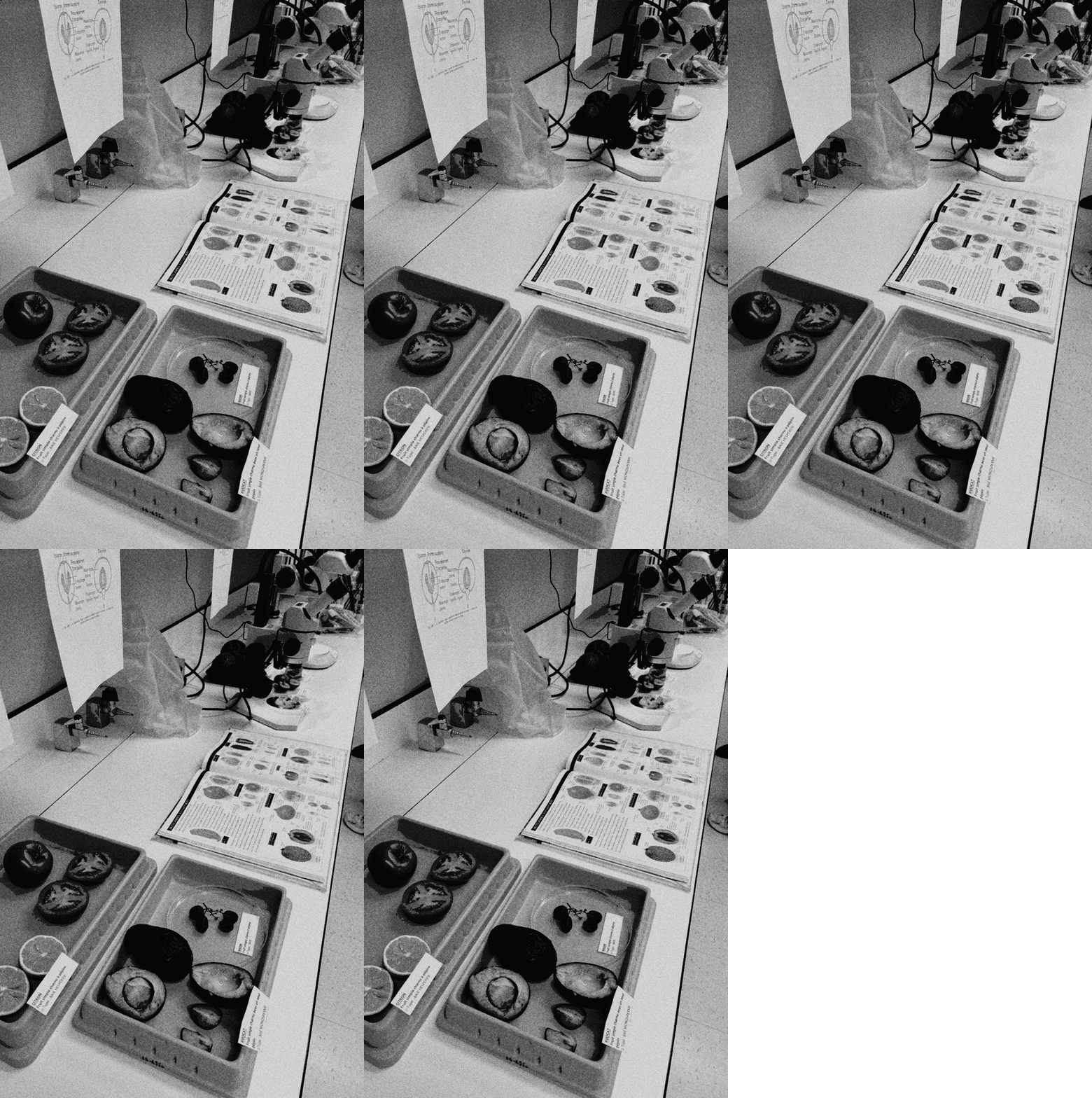
The Volner Nutrition & Sustenance Development lab is a space of clinical appetite—a place where food is not prepared, but processed; not served, but scrutinized. Long metal counters stretch beneath cold fluorescent light, lined with dissected samples of fruit, protein gels, and synthetic emulsions, their pulp and seeds methodically labeled, cataloged, and sterilized for observation. Microscopes bloom like chrome flowers across the bench tops, tilted toward the sliced interiors of avocados, tomatoes, and other textures once considered comforting. Here, food is not indulgence: it is computation. Flavor profiles are flattened into codes, emotional triggers meticulously stripped from every bite. No seasoning is accidental, no aftertaste left unexplored.Everything in this room speaks in charts and gradients. Nutritional density is graphed in silence, then adjusted based on the biometric uptake from the severed population. The “meal pucks” consumed by Innie personnel originate here—cubes of soft color, indistinct in flavor, engineered to meet metabolic requirements without evoking the sensory complexity of remembered meals. Lemon is only included if bitterness does not translate to nostalgia. Texture is uniform. Satiety, measurable. Dissented employees in lab coats communicate to make sure everything is precise, despite their voices being drowned beneath the low hum of refrigeration units and digital thermometers. Even the act of chewing has been studied—optimized for efficiency, neutralized for memory interference.This isn’t a kitchen, it’s an emotional firewall. On one wall, framed posters show anatomical diagrams of fruit—peach pits, grape cross-sections, starch density in a halved yam—each tagged with notes on potential mnemonic contamination. What once offered joy—ripeness, sweetness, salt—is now dissected until it means nothing at all. In this lab, taste is never pleasure. It is protocol. And in the shadows behind the nutrition charts, there are rumors that one failed iteration of a spiced rice puck caused six Innies to speak in full sentences about memories they didn’t know they remembered. The batch was incinerated. The recipe never saved.
The Reflection Wing,
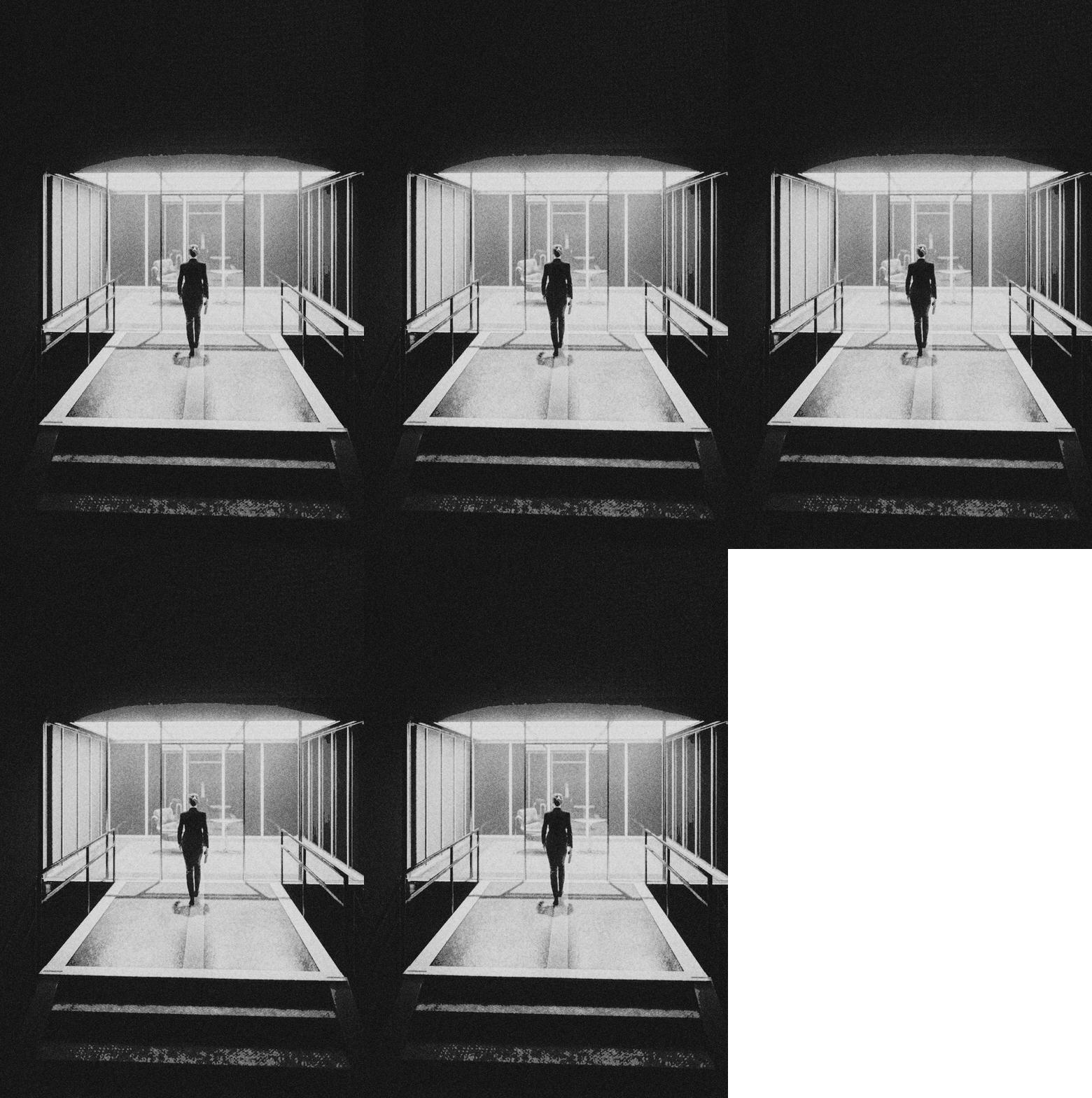
The Reflection Wing does not resemble a correctional space—it is far too elegant, far too softly lit, to be mistaken for discipline. Employees arrive by directive, not reprimand, led across a shadow-swallowed corridor that gradually opens into a glass-encased room glowing with quiet, controlled warmth. Every step is calculated. A red line guides them forward like a lifeline drawn through static. The air is impossibly clean. Inside, the furniture is plush but sterile—red velvet chairs that never wrinkle, a table that bears no fingerprints, a corner lamp that flickers just enough to disarm the sense of time. The walls are frosted, but not opaque. It is unclear who is watching, but the watched can always feel it.They are never told they’ve done anything wrong. Instead, they’re offered a warm drink, a therapeutic blanket, a well-practiced smile from a Dissented "therapist" who speaks in calm, lyrical tones and appears to blink on a preset rhythm. The conversation avoids the edges of panic, steering instead into murmured affirmations about workload stability and procedural clarity. At some point—usually just as the Innie begins to feel safe—details about their Outtie are quietly shared across the table. Their attributes, most of all. Each one delivered with the cadence of care, but meant only to dilute the noise inside. Some details are true. Others are engineered.No clocks mark the time here, only a gentle chime that signals when the session is over. The employee leaves a little calmer, or at least quieter, unaware that the real intention was not to soothe—but to stall. The Reflection Wing is not a place for resolution. It is a buffer, a system of emotional recalibration meant to prevent escalation. A final velvet pause before the Break Room becomes necessary. If the Room is a hammer, the Wing is the glove before the blow. And like everything on the 40th floor, it isn’t about truth. It’s about preservation.
The Breakroom,
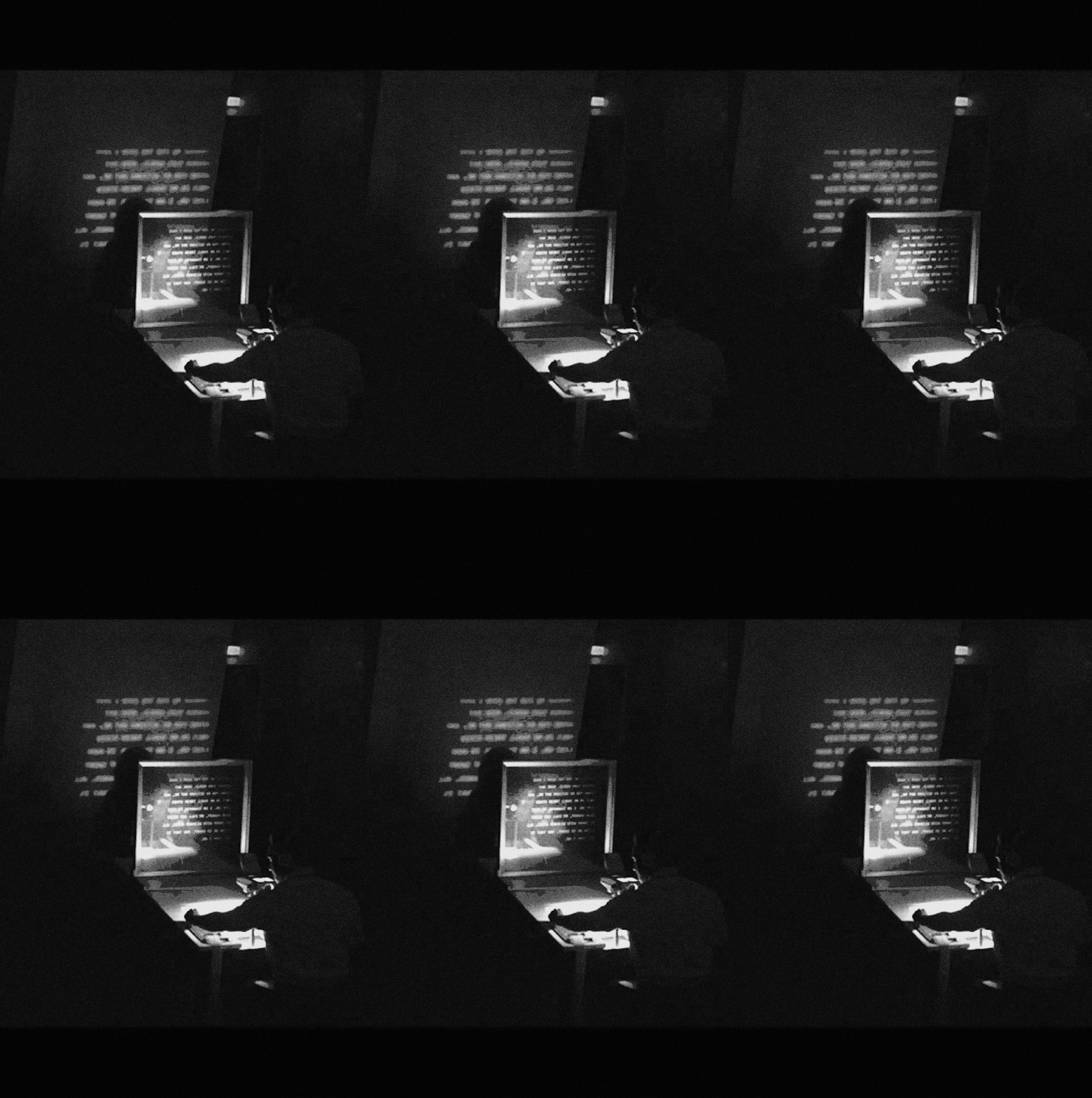
The Break Room resides in the deepest corridor of the Floor of Dissent—its walls unmarked, its entrance requiring no announcement. To most, it does not exist. To those who are summoned, it is unforgettable. A hollow chamber of engineered neutrality, where the air hangs too still and the light lacks a source. There is no warmth, no distraction, no illusion of comfort—only a single table in the center, polished to such precision it reflects no faces. Two biometric hand plates are embedded like relics, slick and cold to the touch. No one ever happens upon here by accident. The Shepard guides and the door opens by schedule, and then it closes, sealing intent inside.There are no windows. No clocks. Only the ever-present Shepard—a Manager assigned to monitor cognitive compliance—seated just beyond direct gaze, beneath a bank of silent monitors that document everything from blink rate to tonal cadence. The employee is placed before the The Statement of Behavioral Clarification, a laminated fiberboard recitation of scripted regret. The phrases are brutal not in cruelty but in awkward self-humiliation: “I mistook independent thought for safety risk.” “I endangered productivity through personal sentiment.” The syntax stumbles. The emotion is strained. Still, it must be spoken again and again. Not with accuracy, but with biochemical sincerity—measured in skin conductivity, pulse irregularity, and pupil response.Each session is its own calibration. One employee might need two hours; another might remain for a full week. Meals are delivered, uneaten. The lights do not dim. Attempts to cry out are absorbed by the room’s soundproof insulation. Those who resist find themselves beginning again. Those who comply too quickly are flagged for further review. This is not a punishment. This is a procedure of realignment. The Shepard never shouts, never instructs. They simply observe, waiting for the body to teach the mind what it needs to believe. When the printout confirms remorse has reached an acceptable index threshold, the Shepard presses a single button. Nothing is said. The door opens.When the employee steps back into the corridor, they walk a little straighter, speak a little softer, but never forget what was taken from them, what they had to endure. The Break Room resets itself, sterile and immaculate once more. The table gleams, the light returns, and the hum of the floor continues uninterrupted. It is not a place of punishment. It is a crucible of correction. A machine built not to harm, but to smooth the corners of dissent until nothing jagged remains.
Orientation ROOM,
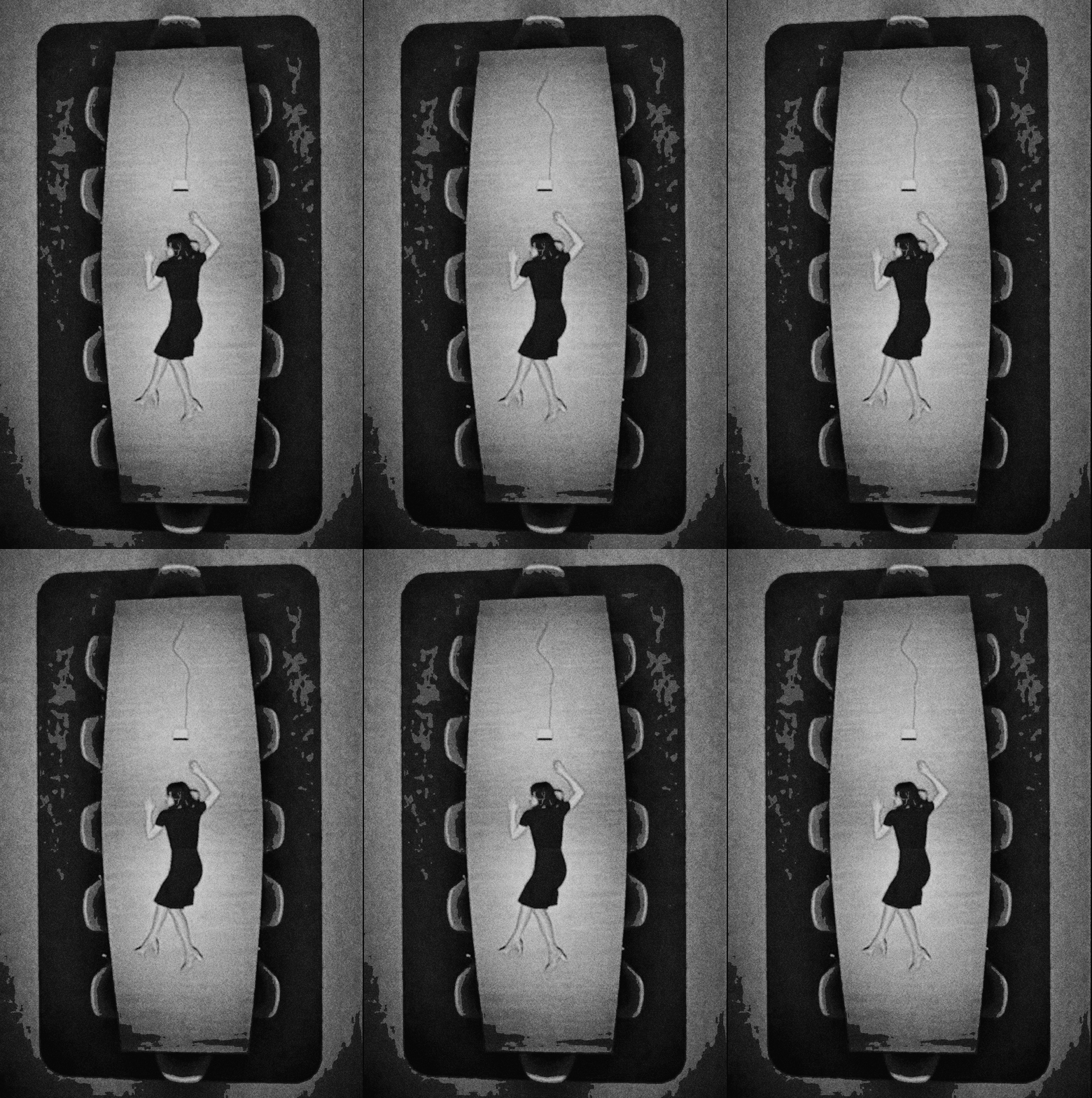
The Orientation Room may seem like a simple room, however its not just a room but a rite—sealed in acoustics, designed with divine symmetry, lit like an interrogation disguised as birth. From above, it resembles a coffin stretched into bureaucracy, a table long as a lie with chairs flanking either side like pallbearers. The floor is upholstered in a somber felt that hushes every footstep, and the table’s lacquer gleams like wet stone under the single corded light that dangles from the ceiling like a noose repurposed for civility. This is where they are delivered, or "born"—fresh from the Recovery Room, hearts still fluttering with residual static, eyes raw with the absence of memory.A voice spills through the ceiling speaker—flat, toneless, and absolute. It is always the same voice, even if it belongs to different mouths. The department chief speaks from a chamber adjacent, obscured behind a mirrored slit in the wall, reading from a manual older than any of their recorded birthdays. The first question—“Who are you?”—is asked until the answer becomes not resistance, but silence. “Unknown,” when spoken aloud, is met with a soft chime, the only approval they’ll hear until they’re seated at their final station. The questions are clinical, but they sting like scripture. Five fragments of inquiry, five thresholds crossed, scored not on accuracy, but on emptiness.Should the procedure stumble—should the subject refuse to fracture properly—they are brought to the stairwell. There, under surveillance cloaked as concern, they are guided to the door that divides the Dissented from the whole. Crossing the threshold induces symptoms not unlike drowning: vertigo, nausea, a sense of implosion that cannot be remembered, only feared. Those who walk out return within days. Those who don’t were never meant to. Volner-Downe Inc. has found that the truth always echoes loudest when the employee "chooses" it themselves.Once “the choice” has been made and the employee returns to the Orientation Room, the final tether is offered. A video plays: their Outie, smiling, confident, reassuring. It speaks of purpose, of clarity, of sacrifice for a higher order. The Innie watches their own face promise safety—and they ( sometimes ) believe it, because what else is left? Compliance is taught in soft tones and laminated handbooks. The kitchenette is stocked, the tokens shine, and the four volumes rest beneath the clock that doesn’t tick. Training begins that afternoon. Their hands are now clean. Their devotion: pristine. And Volner-Downe welcomes them, as always, with arms unseen.
THE Executive Liaison Tier,
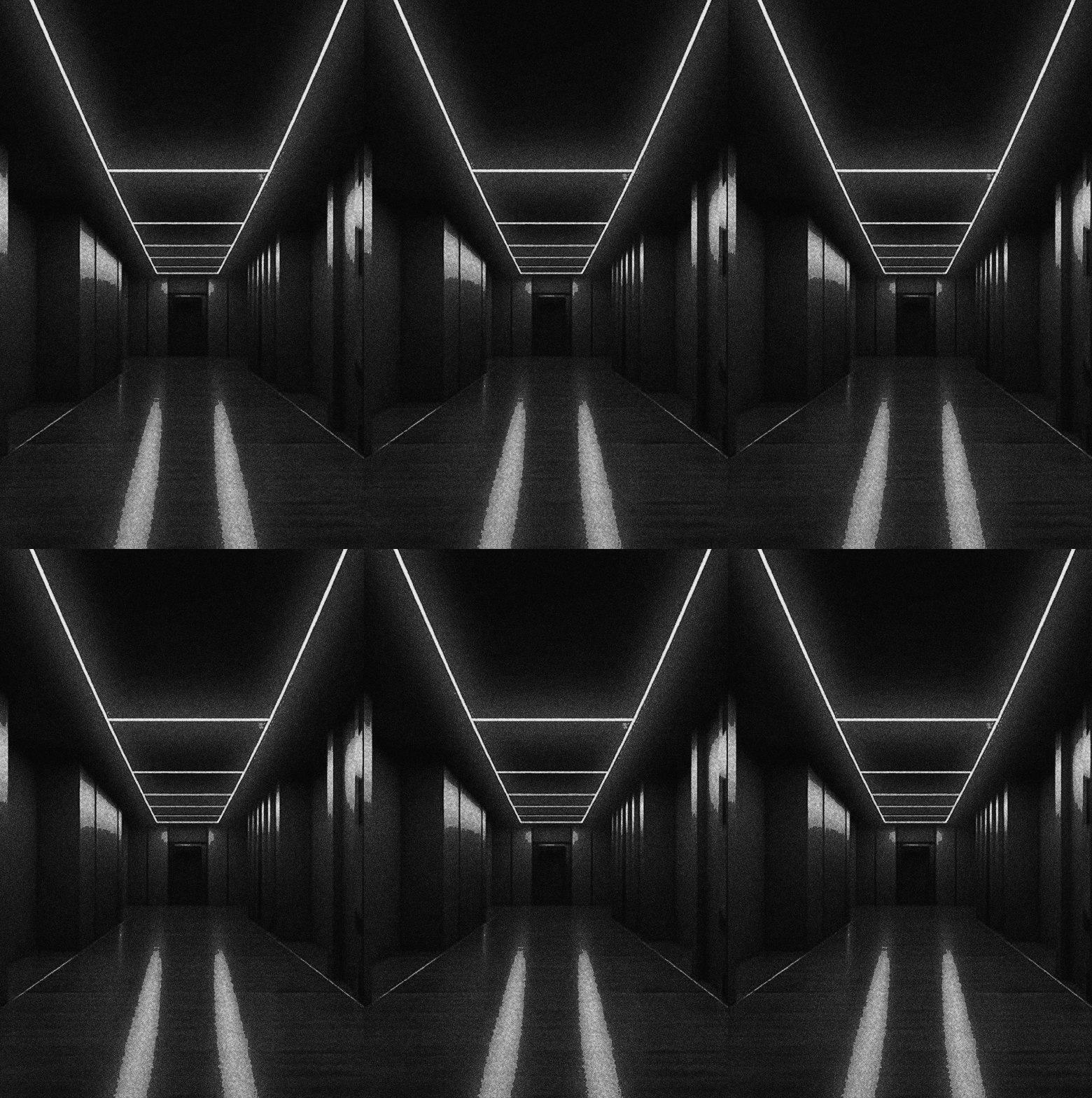
The 110th floor of the Volner Building—formally known as the Executive Liaison Tier—is unlike any other level. It is a floor that breathes differently: quieter, slower, almost reverent. The hallway leading into its core stretches like a question with no punctuation, dark-paneled walls swallowing footfalls whole, ceiling lights cast in precision-cut lines that hum with soft voltage. There are no placards, no directional guides—only closed doors, each indistinguishable from the next. However within, the rooms diverge into worlds of extreme luxury, wrapped in silence so complete it feels engineered. Windows run the full length of certain suites, offering a view of Manhattan that seems almost artificial in its tranquility, suspended far above the chaos below.Only the Executive Liaison Corps and the current CEO possess keycard access to this floor, and even their presence is methodically staggered. Staff from lower divisions are never invited. If an Innie has seen this floor, they haven’t returned to tell it. It’s said that somewhere near its center lies the chamber where the Dissension Procedure is performed—a pristine space locked behind biometric thresholds and soundproof alloy, where Outies are allowed in during a completely separate entrance. Top secret documentation exists for this room. Though no blueprints reflect its square footage but within it, the mind is halved, re-threaded, and delivered back in polished fragments. It is not spoken of, not even among Managers. Only the Liaison Corps understands its full implications.Their offices along the corridor, of course, belong to the high-ranking Executive decision-makers. Their furnishings are elegant, severe: marble desks without clutter, books that cannot be removed from shelves, chairs that swivel just once before returning to center. The air here is heavier, richer, touched by temperature-controlled systems that respond to biometric presence. In private lounges, dossiers are reviewed not with pens but with retinal scans, and memos are passed through encrypted channels woven directly into the walls. No detail escapes calibration. This is not simply a workplace—it is a cathedral of oversight.What happens on the __Executive Floor is not meant to be understood by those beneath it. Its corridors do not echo gossip, only decisions. Here, the House of Dissension is not questioned—it is worshipped in polished chrome and carbon fiber. It is the apex of the Volner-Downe design: a living, breathing hierarchy cloaked in darkness and light. The city stretches below like a forgotten postcard and in its coldest corner, a secret unfolds—delicate, enduring, irreversible.
The Dissension Procedure Room,
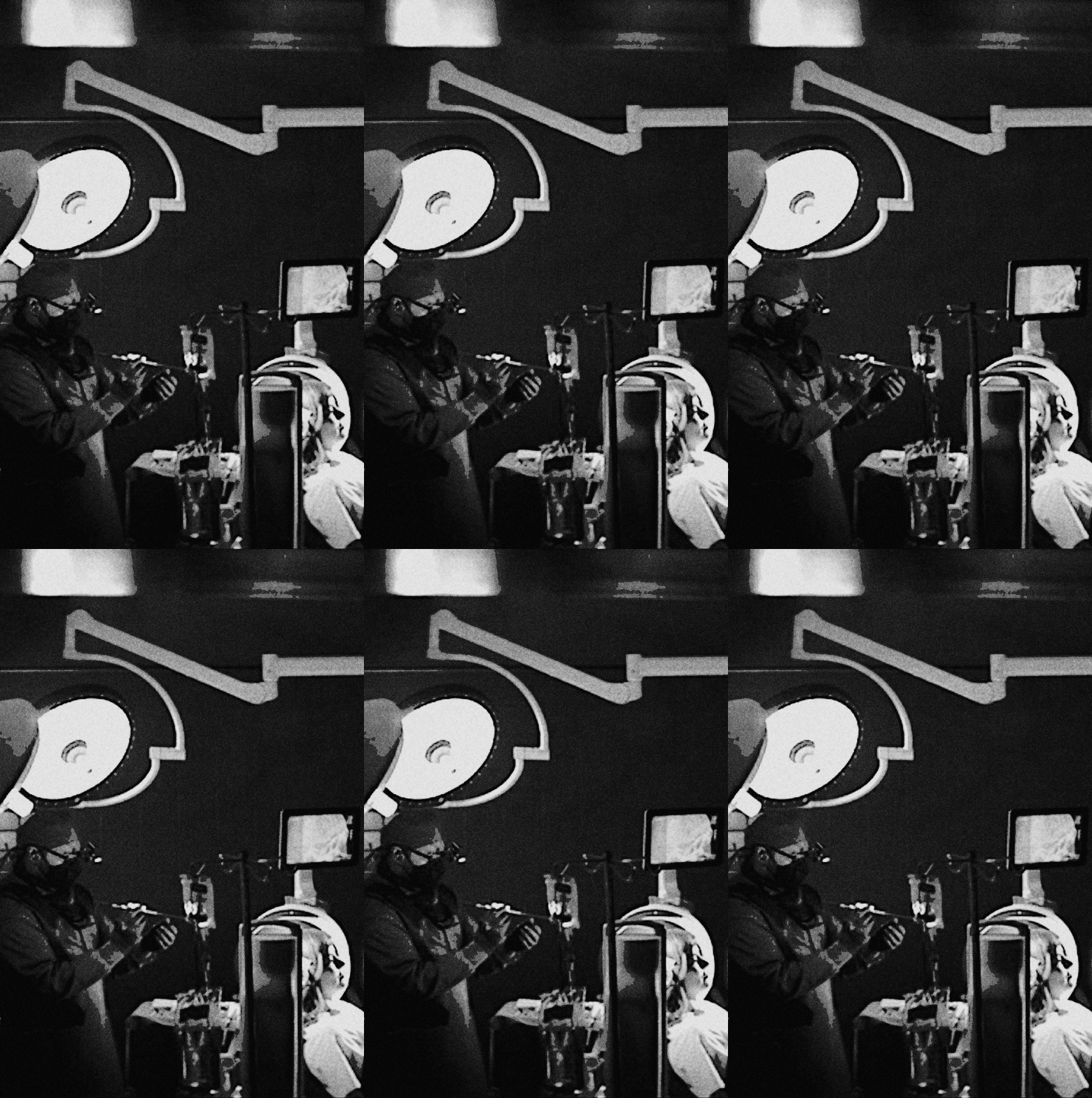
The Dissension Procedure Room is not marked on any official floor map. There is no plaque on the wall, no engraved title on its sliding door—only a silent blood drawing scan, a breath-held pause, and then admittance. It sits near the center of the Executive Liaison Tier like an artery hidden beneath bone, softly pulsing with purpose. The lighting is clinical, but not cold—bathed in a deep-sea blue meant to disarm rather than soothe. Every inch is lacquered in quiet utility: stainless steel fixtures, matte black ceiling arms, and surgical consoles designed to hover, not intrude. Machines hum low, like a lullaby stripped of comfort. The silence, when it arrives, is total.The patient—if they can be called that—is seated in a cradle-like chair, head secured beneath a network of articulated arms. One screen projects real-time neural mapping; another loops serene, meaningless imagery that only the surgeon can explain. The air feels tighter here, calibrated by unseen systems to slow breath, soften pulse, reduce the chance of memory clinging too long. Those administering the procedure wear no name tags. Their expressions are practiced neutrality, their movements unhurried. There is no drama in the split—only sequence. Electrodes are attached, blood drawn, calibrations made. Then the world disappears in halves.
The Viewing Vault,
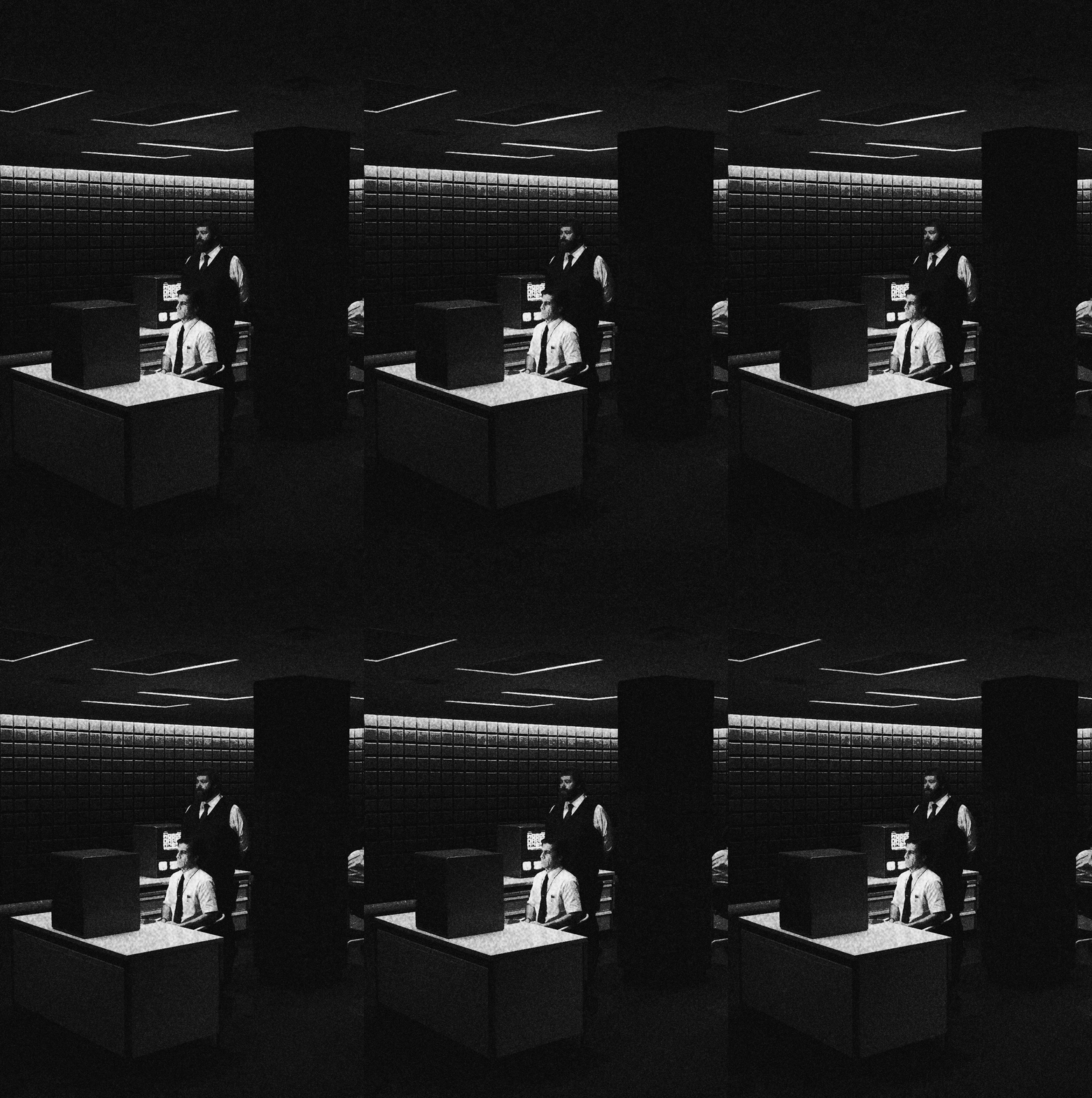
They call it the Viewing Vault, though no vault in any bank could ever guard what’s watched here. Encased by emerald-lit walls fashioned from obsidian-tinted tiles—each one soundproof, memory-sealed, and burn-resistant—this chamber hums with a silence so engineered it feels alive. In its nucleus, four desks encircle a void-black column, each station adorned with a monolithic cube: the terminal. These are not computers—they are relics in disguise, humming with encrypted feeds, purged hourly by a cleansing script known only to the CEO. Time is a hazard here.Above, the ceiling panels form slashes of sterile white light, stitched with surgical precision across the darkness like wounds that never bleed. Shadows drag in strange geometries, cast by the faint glow of the monitors, which show only fragments: flickering biometric maps, pulses that spike without cause, grids that move like they’re breathing. You're only allowed to speak here when the CEO demands it—observation is key. The CEO stands always, never sits, as if proximity to the Vault’s purpose demands a penance. He watches as though through confession—through devotion. Surveillance here is not an act, but a sacrament.This is where the secret breathes. The sacred experiment—Project Aletheia—unspools in fragments too vast to be held by a single screen, too monstrous to be voiced. Three of the Executive Liaison Corp hold fragments of the truth, names redacted even from their own files, and none of them are allowed to speak to each other outside protocol. They are only allowed to observe—as if witnessing alone was the price of complicity. And Sebastian Volner-Downe? He does not blink. He merely watches what was never meant to be seen, in a room where even silence wears a collar.